CLRA Compliance Checklist for Manpower Companies in India: What You Must Get Right in 2026
Every manpower company in India that deploys contract workers has legal obligations under the Contract Labour (Regulation and Abolition) Act, 1970.
Read More
EyeQHR offers comprehensive HR management solutions, from attendance to statutory compliance, designed to scale with your business.

Every manpower company in India that deploys contract workers has legal obligations under the Contract Labour (Regulation and Abolition) Act, 1970.
Read More
Minimum wage compliance is one of the most consistent pain points for manpower companies, staffing agencies, and any business that hires contract or daily-wage workers across multiple states.
Read More
This guide covers how field employee attendance tracking actually works for manpower companies, security agencies, and facility management businesses.
Read More
This guide walks through the process step by step. We cover what makes contract payroll different from regular payroll, how to set it up correctly, and where the common errors appear....
Read More
This guide covers the complete formula, worked examples for different worker categories, and the overtime rules that apply to contract staff.
Read More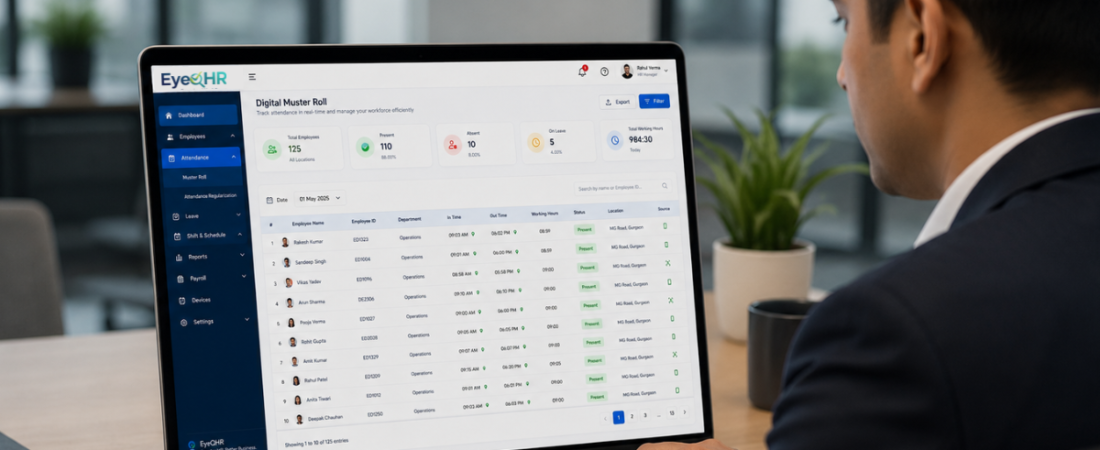
This guide explains the muster roll format prescribed under CLRA, how to fill it correctly, common mistakes that attract penalties, and how to manage muster rolls across multiple sites without drowning in paperwork.
Read More
This guide gives you a clear, practical explanation of how PF and ESI work for contract workers in India, what the eligibility thresholds are, how to calculate contributions correctly
Read More
Finding the right HRMS for a manpower company in India is a very different exercise from choosing HR software for a standard office-based business. The workforce is in the field.
Read More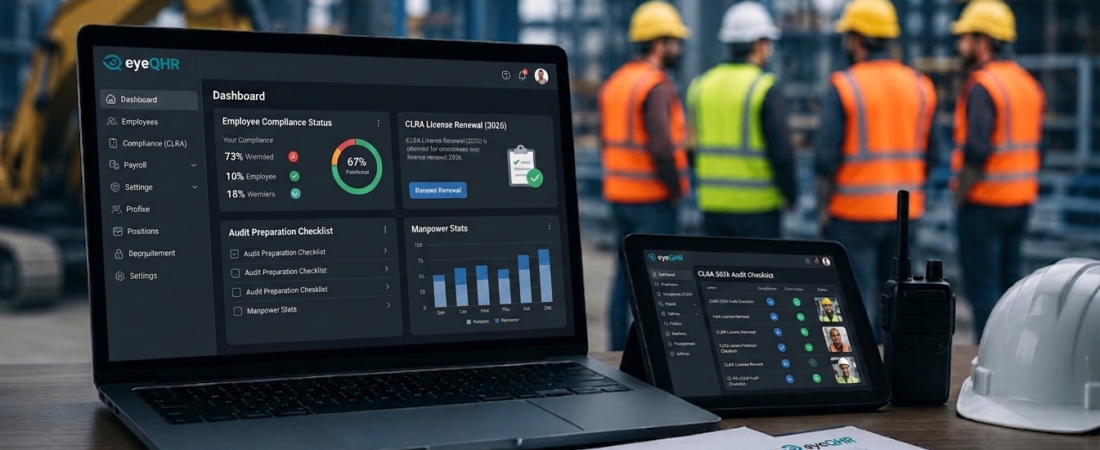
A labour inspector can walk into any client site where your workers are deployed. Today, without notice. What they find in the next 20 minutes determines whether your business continues operating normally or faces a notice, a penalty, or in serious cases, the suspension of your contractor licence.
Read More
If your payroll team spends three days every month calculating wages for 200 contract workers in a spreadsheet, the problem is not the team. It is the tool. Spreadsheets were designed for analysis, not for running payroll across a variable-attendance, multi-site, multi-state workforce. When you use them for payroll, you are asking a tool to do something it was never built for.
Read More
A security company in Jaipur was managing attendance for 340 guards across 22 client sites using WhatsApp messages and paper registers. By the 28th of every month, they still did not have accurate attendance data for payroll. Supervisors had sent photos of handwritten sheets. Several had not sent anything. Payroll was delayed, workers complained, and one client raised a billing dispute.
Read More
If you run a manpower company, staffing agency, or security firm in India, you already know that managing contract labour is nothing like managing a regular office workforce. Workers are spread across client sites, wages change with attendance, compliance requirements pile up every month, and one missed filing can put your contractor licence at risk. The companies that still handle all of this manually in spreadsheets and WhatsApp groups are not just inefficient. They are carrying risks they cannot see.
Read More
Every business starts on Excel. It is free, familiar, and flexible enough for a team of five. But there comes a point when that same spreadsheet becomes the single biggest source of HR headaches in the company. The question is not whether you will outgrow it. The question is whether you will recognize the signs before it costs you.
Read More
I started managing HR myself because it seemed simple. Twelve employees. A salary sheet. A leave tracker. Some TDS calculations every quarter. How complicated could it be?
Read More
The average Indian SME running payroll manually makes between 3 and 8 errors per month. Some are minor. Some are serious—an incorrect TDS computation that triggers a tax notice. And some are invisible until an audit finds them years later. The root cause in every case is the same: a process that depends on humans to remember the right numbers and apply them correctly every time.
Read More
Running a small or mid-sized business in India means wearing many hats. The founder is often the sales head, the operations manager, and the HR department simultaneously. Every rupee spent on administration is a rupee not available for growth. Every hour spent on payroll is an hour not spent on customers.
Read MoreTry it risk free — we don’t charge cancellation fees.